
Madison County Municipal Court Warrants
Don't look for a city criminal courthouse in Madison County. Iowa runs one unified District Court. A Judicial District 5A magistrate serves the county and takes simple misdemeanors, traffic and ordinance cases, preliminary hearings, bail, municipal infractions, and warrant issuance. The Clerk of Court is the public contact for the state docket. So "municipal warrant" works as a search phrase, not the name of a separate local court. A city officer can write a citation. A city code can push a matter into Iowa procedure. Either way, a criminal warrant gets issued through the Iowa court structure, never by a city bench.
Madison County Municipal Warrant Boundaries
A municipal infraction is civil, not criminal. Iowa Code chapter 364 says so. A Madison County city clerk or council can manage local bills, parking, and infraction records, but that is administration, not criminal court work.
| Issue | Starting office | Record type |
|---|---|---|
| City parking or bill | Relevant city clerk | City administrative record |
| Municipal infraction | City, then court if filed | Civil infraction record |
| State traffic citation | Clerk of Court | District Court docket |
| Failure to appear | Clerk, then Sheriff | Court event and enforcement status |
Ask which authority issued the paper before asking how to resolve it.
Madison County Cities With Municipal Courts
None of Madison County's five largest cities runs its own criminal court or official city warrant portal. Winterset and Earlham each keep local police. St. Charles and Truro get contract law enforcement from the Madison County Sheriff. Patterson posts no separate police or warrant interface.
| City | Local route | Criminal court route |
|---|---|---|
| Winterset | Police or City Hall | Madison Clerk and Sheriff |
| Earlham | Police or city clerk | Madison Clerk and Sheriff |
| St. Charles | City clerk; contract Sheriff | Madison Clerk and Sheriff |
| Truro | City page; contract Sheriff | Madison Clerk and Sheriff |
| Patterson | Verify current city contact | Madison Clerk and Sheriff |
Winterset Madison County Municipal Warrant Route
Winterset's municipal code leans on Iowa chapter 805 and magistrate procedure for traffic and some ordinance matters. City Hall handles the city's administration and payment questions. Winterset Police serves as a local law-enforcement contact, though its public page offers no warrant lookup. For a criminal traffic citation, a failure-to-appear entry, or an arrest warrant, turn to Iowa Courts Online and the Madison County Clerk. City parking or a civil municipal infraction starts with City Hall instead. County and city public-safety offices sit close together, but that does not merge their duties.
Checking a Municipal Court Warrant
No site posts a live Madison County city-warrant list. The best warrant check pairs public court information with a direct call to confirm.
- Read the ticket or notice and find its case or citation number.
- Search Iowa Courts Online with Madison County selected.
- Call the Clerk at 515-462-4451 about the docket event and court procedure.
- Call the Sheriff at 515-462-3575 about current enforcement status.
- Use the city clerk only for civil city matters or local payment records.
The IOWA System serves criminal-justice agencies only, offering no public statewide warrant search for Madison County.
Madison County Municipal Warrant Clerks
Two clerks, two jobs. A Madison County city clerk manages city administrative business. The Clerk of Court keeps the state docket. That docket covers criminal, traffic, ordinance, magistrate, and District Court cases, so mixing the two offices can send a correct payment to the wrong system or a warrant question to an office with no answer. The official Iowa Code chapter 602 index lays out the state route to the magistrate-jurisdiction provisions.
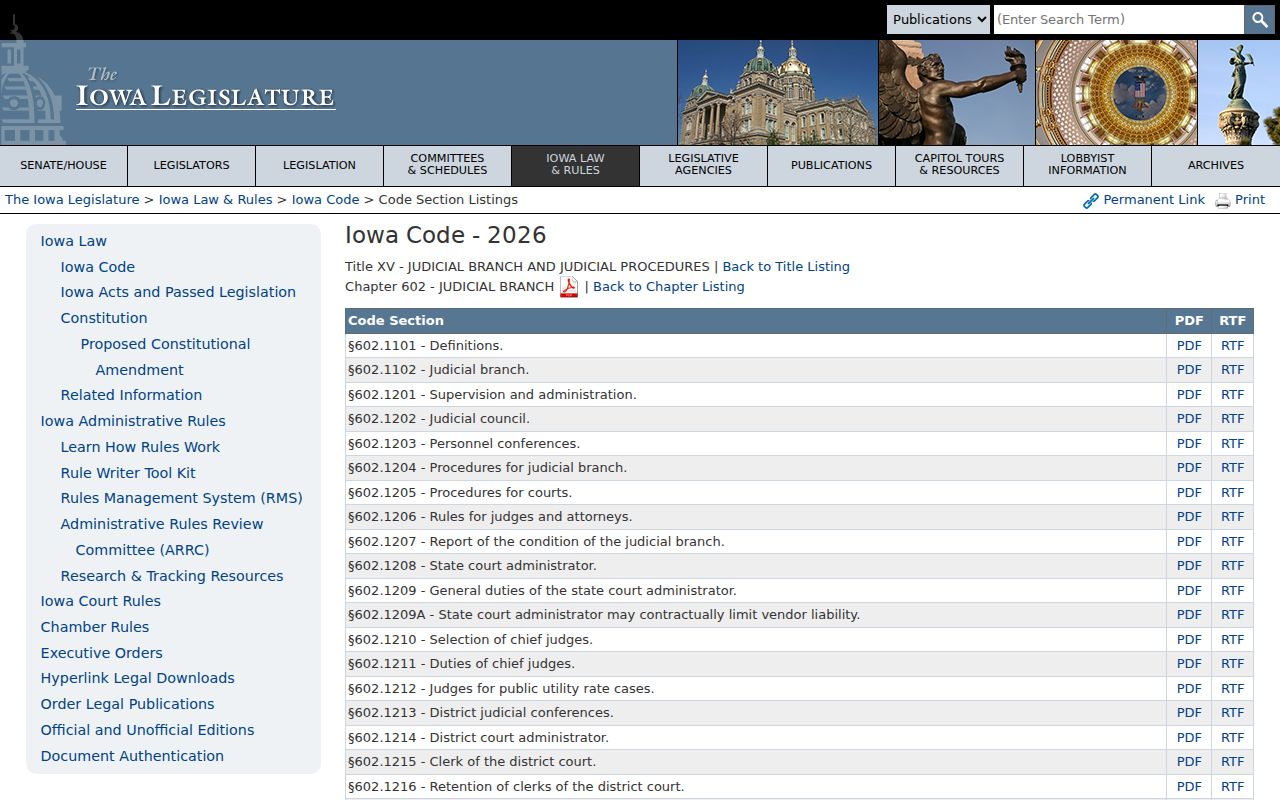
That index shows the magistrate sits inside the Iowa court system, not in a city-created criminal court anywhere in Madison County.
Route by record: Use the city clerk for civil municipal business and the Clerk of Court for state case and citation records.
For current service or execution details, ask the Madison County Sheriff. Some material stays restricted.
Inside a Municipal Court Warrant
When a city citation grows into a state arrest warrant, Iowa law governs the record. Madison County publishes no sample warrant. These fields are neutral placeholders, not a real record.
| Issuing authority | District Court magistrate or court. |
|---|---|
| Case key | Case or citation number. |
| Underlying matter | Traffic, ordinance, misdemeanor, or other charge. |
| Issue date | Date the court issued process. |
| Bond | Any court-set sum and conditions. |
| Status event | Issue, service, return, recall, or disposition label. |
Copy the exact official wording when you call, because a Madison County docket entry alone does not confirm live enforcement status.
Madison County Municipal Warrant FTA
Iowa Code section 805.5 makes willful failure to appear on a citation a possible simple misdemeanor, and it can bring an arrest warrant. The Clerk transfers the process as required, and the issuing agency receives it for enforcement. That is Iowa's arrest-warrant language, not some local capias pro fine system. Timing matters online. A recent citation can take 14 to 21 days to show up. An early blank search proves nothing. Note the ticket date and court date. Call the Clerk after the listing window passes. A docket can carry a scheduled appearance, a failure to appear, warrant issuance, an officer return, bond, payment, recall, or final disposition. Those entries mark steps in a case. They do not all mean the same thing. Quote the label exactly and ask the Clerk what the latest order requires. If the question is whether an officer can act on the warrant right now, take that to the Sheriff. Keeping those two questions apart is the safest way to read Madison County warrant records. After the court acts, keep the signed order and any receipt. Ask the Clerk to identify the documented recall or disposition, then ask how the Sheriff's record updates. No public Madison County source gives a fixed synchronization time. A city clerk cannot confirm criminal-court outcomes, even when the whole thing began with a city citation or an ordinance contact.
Madison County Municipal Warrant Authority
The official Iowa Code chapter 22 index gives the state route to public-record access rules and their exceptions for Madison County.
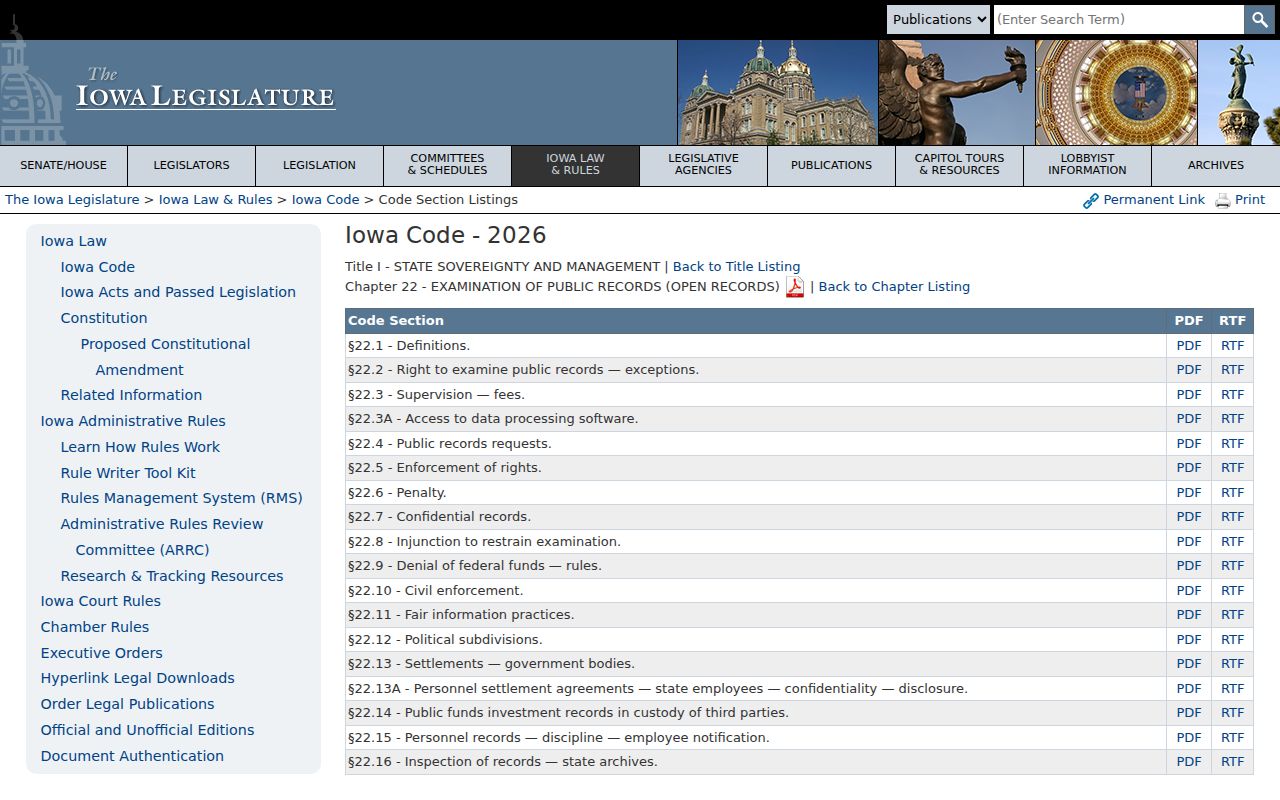
Madison County has no city criminal court of its own. A District 5A magistrate sitting for Madison County handles simple misdemeanors, traffic and ordinance cases, preliminary matters, search-warrant proceedings, bail, county infractions, and municipal infractions. That authority belongs to the Iowa District Court. Cities can adopt and administer ordinances. They cannot build a parallel city bench with its own public warrant database. The split shapes where you go. A city clerk may confirm a parking balance, a local bill, a council action, or an administrative infraction record. Once a case enters the state docket, the Madison County Clerk of Court becomes the public case contact. Ask each office only for the record it keeps. When a court issues arrest process, the Sheriff or another peace officer handles enforcement. A narrow Chapter 22 request works best. It should state the city or agency, the case or citation number, the date range, the record type, and the delivery format. The office may charge reasonable actual costs. It may also withhold material protected by law or by order. Requesting a specific order or return is far more useful than asking someone to assemble a warrant list that does not exist. The index supports a request for an existing public record without implying that every warrant or police file must be disclosed.
How to Resolve a Municipal Court Warrant
First confirm what the matter is. Is it civil city business, court debt, or a live Madison County arrest warrant? The Clerk can say whether it takes payment, an appearance, a motion, bond, or another order, and paying through Iowa Courts ePayment does not automatically recall a warrant. City parking is not payable there.
Before paying: Confirm the case with the Clerk and reject calls demanding bitcoin, gift cards, prepaid cards, or payment by text link.
If a warrant exists, get legal advice first. Keep the court order and payment receipt. Verify the recall entry with the Clerk and the enforcement update with the Madison County Sheriff.
Madison County Municipal Warrant Access
Iowa Code Chapter 22 lets you request existing public records by several methods. Nothing in it forces an office to create a new municipal warrant list. A narrow request should name the city or agency, the date range, the case number, the record type, and the format you want. Limits still apply. Chapter 22 exceptions, sealed orders, juvenile confidentiality, and ongoing investigative records may all restrict release. Ask the office to cite its basis for withholding and to identify any separable public portion you can still receive. Fees and timing differ by channel. Iowa Courts Online is free to search. A copy request may carry reasonable actual production costs. Neither Madison County nor its cities publish a warrant-certificate fee or a city warrant-record fee. Confirm price and delivery method first. A records response can document an old court event without settling whether the Sheriff treats the process as enforceable today. Keep the response date, and ask the correct office about current status. Small-city portal gaps are real. They do not authorize guessing. St. Charles and Truro residents should follow the contract-Sheriff route, while Earlham and Winterset residents may start with their local police for local agency questions. In all five cities, the Madison Clerk remains the state court-record contact. The broader Madison County traffic warrant search explains the court route for missed traffic dates.