
Madison County's Most Wanted Program
Madison County has no public most-wanted roster. The Sheriff posts no Crime Stoppers page and runs no named fugitive-tip program, and neither the county site nor the court pages list wanted individuals. That gap shapes everything on this topic. There is no official local list to copy, treat as complete, or check against, and this page carries no names, photographs, mugshots, or allegations about any person. For contact, two offices matter. The Madison County Sheriff is the law-enforcement starting point, while the Clerk of Court keeps the public docket. The federal Southern Iowa Fugitive Task Force also works in Madison County, though the U.S. Marshals district page describes that program rather than serving as a county roster.
Madison County Wanted Roster Gap
A program page and a person roster are not the same thing. One lists duties and phone numbers. The other names sought individuals. Madison County publishes the Sheriff's responsibilities, jail information, civil process, communications, and contract-policing roles, and it publishes no public most-wanted list of people.
Official-source finding: No local roster means readers should not substitute a mugshot site, social post, or commercial people-search page.
A blank here proves nothing. Madison County's silence on a roster is not silence on warrants. Current warrant data can sit inside the restricted IOWA System, which only criminal-justice agencies use.
How the Most Wanted Lists Work
Where a most-wanted list exists at all, it is a chosen few, not the full set of open warrants. An agency picks cases based on priorities, investigational needs, available photographs, and plain operational judgment. The public never sees the whole file that way. Madison County has published no selection rules or update schedule, because it has no official county list to schedule. An active-warrant file is a different animal entirely. It tracks warrant status, not publicity choices. A jail roster is different again, since it describes who is in custody. None of these records settles guilt or closes a case, and blending them into one label only misleads people.
Madison County Most Wanted Fallback
The official Madison County Sheriff's Office page lists the county's law-enforcement contacts and service responsibilities.
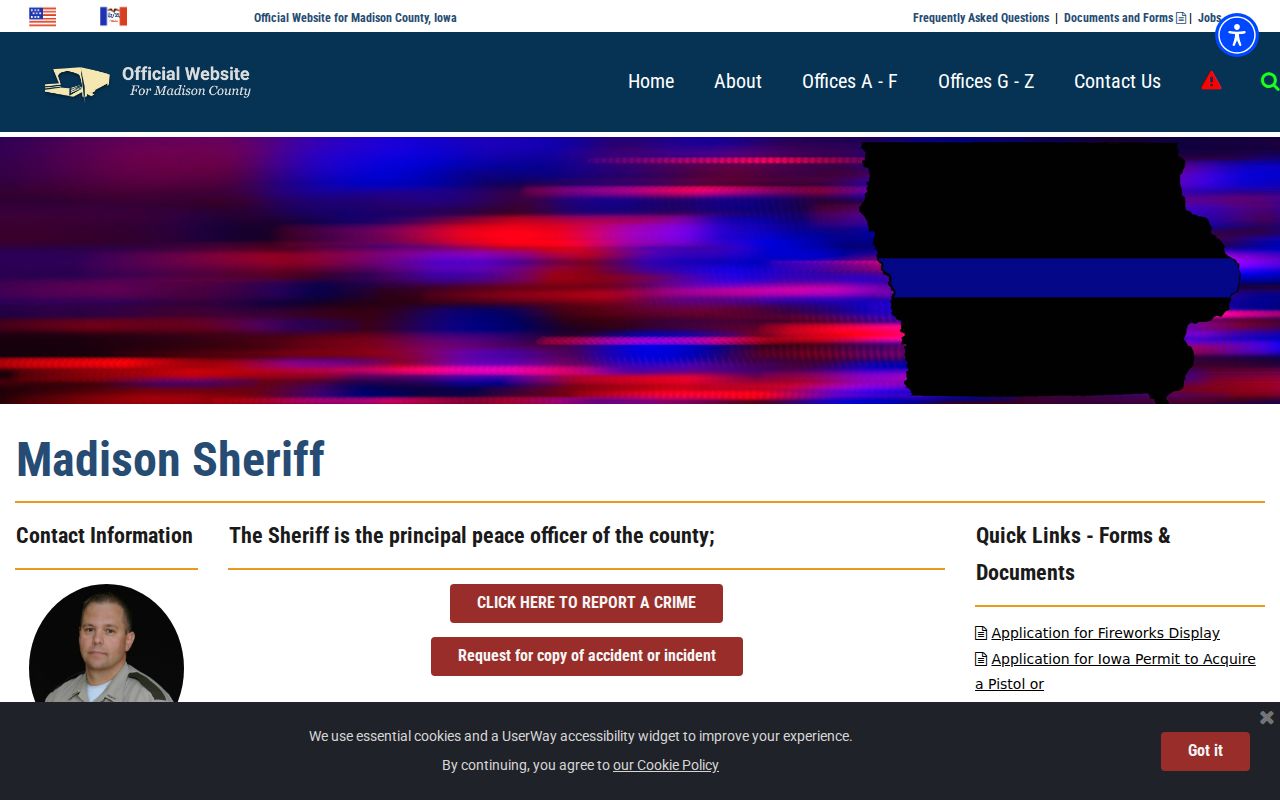
The Madison County agency page points to a phone fallback rather than a named most-wanted roster. Call 515-462-3575 with a routine law-enforcement question. That line is the office's published main number, not a tip hotline. Ask the staff what procedure applies and whether they can take the information there. For an emergency or any immediate danger, call 911 instead. Never detain, confront, follow, or photograph someone because of what you saw online, and skip email or records requests when the matter is urgent.
Reporting a Tip Safely
Madison County has no Crime Stoppers page and no dedicated fugitive-tip line, so nobody there can promise anonymity, a reward, or a set follow-up process. Use the county's published emergency and non-emergency channels only. Give what you saw directly, not rumor. Trained officers decide the response.
Safety first: Call 911 for an immediate threat; otherwise call the Sheriff's published main number and never approach the person yourself.
Good tips carry specifics: time, location, direction of travel, vehicle description, and the conduct you actually observed. Madison County deputies work from those details. Never post a person's location publicly. Skip private records and hearsay you cannot tie to an official notice.
Madison County Wanted Contact Routes
The Madison County Sheriff provides contract policing for St. Charles and Truro, so their residents may start at a city page, but the county office is the real route for routine law-enforcement questions. Winterset and Earlham each have their own police pages, and neither city publishes an official most-wanted list. Patterson has no standalone police or warrant portal. The official St. Charles sheriff page shows how a city points residents to that county channel.
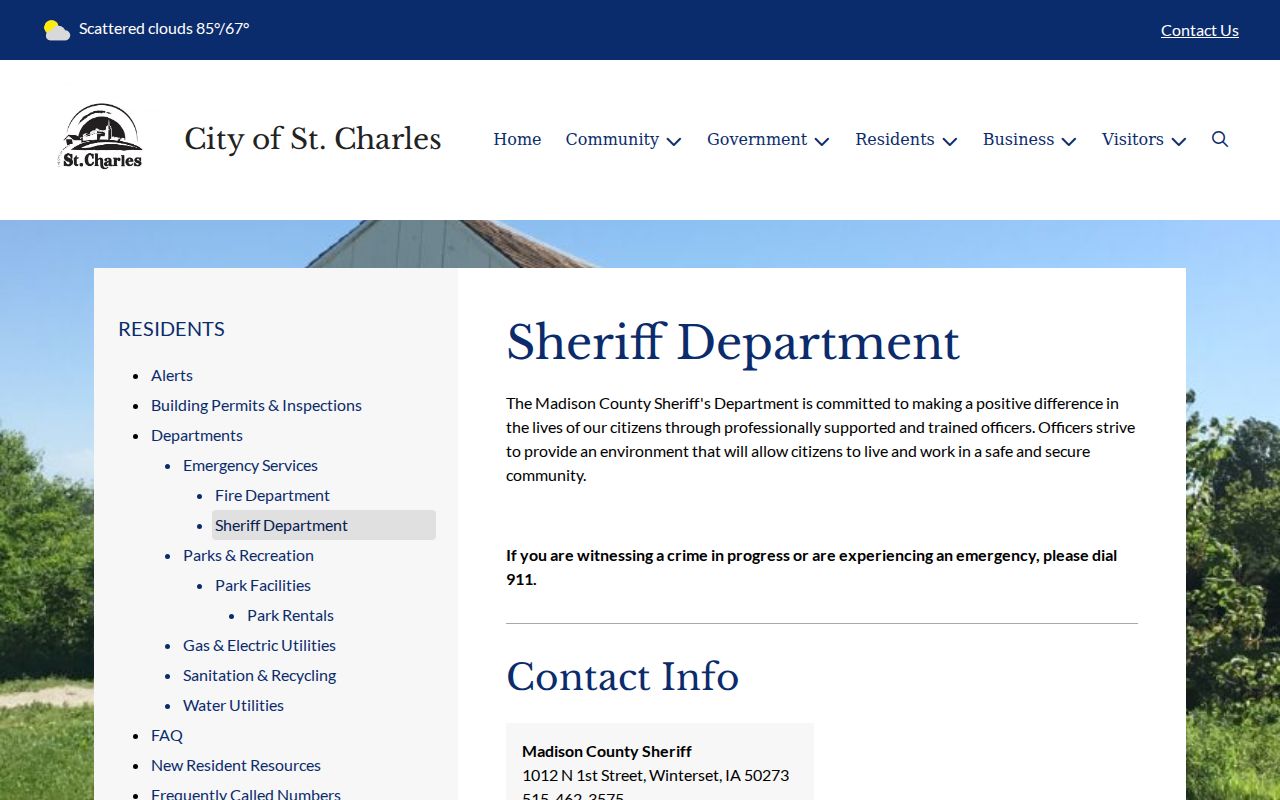
This city-to-county route is a contact map, not a wanted list. When the pages disagree, use the Madison County Sheriff's current address and main number.
Most Wanted Lists vs Active Warrants
Four different questions, four different records. A most-wanted feature, an active warrant, jail custody, and a conviction each answer one, and only an official agency can confirm the status it keeps. Iowa Courts Online shows public case events in Madison County, but it is not the live law-enforcement warrant system, and the restricted IOWA System is closed to public search.
| Record | What it means | What it does not prove |
|---|---|---|
| Most-wanted feature | An agency selected a case for public attention | That every warrant is listed |
| Active warrant | Process may remain enforceable after confirmation | Conviction or current custody |
| Jail roster | A custody record may be available | Why a person is held or whether others have warrants |
| Court docket | Public filings and event history | Live IOWA enforcement status |
Want status rather than a featured program? The Madison County outstanding warrant record is the better fit.
Madison County Most Wanted Federal Boundary
The U.S. Marshals Service Southern District of Iowa runs a Southern Iowa Fugitive Task Force whose territory includes Madison County. It works violent local, state, and federal fugitive matters. The district's own information page is thin, though. It is not a local warrant lookup. Federal cases keep separate records as well. PACER can open public federal docket material, yet sealed documents and sealed indictments stay closed. Iowa Courts Online will not confirm a federal warrant either. Anyone who knows a matter is federal should go through the federal court or the responsible agency, ideally with a lawyer. Task force coverage never amounts to an official Madison County warrant roster.
Madison County Most Wanted Status Checks
Is there a warrant on your case? Start with Iowa Courts Online. Search Madison County by case type, name, or case or citation number. Copy the exact event label and its date. Then call the Clerk of Court at 515-462-4451 and ask what the public docket shows and what court procedure applies.
- Find the case or citation number from official paperwork.
- Read the public docket chronology, not just the case caption.
- Ask the Clerk whether the record shows issuance, return, recall, or disposition.
- Ask the Sheriff at 515-462-3575 about current enforcement procedure.
- Record the date and office used for each confirmation.
A blank docket search in Madison County proves nothing. Fresh citations may lag, and sealed, juvenile, or law-enforcement-only records stay out of public view.
If You Think You Are on a List
Skip the commercial rosters and urgent callers. Neither settles anything. Gather the case or citation number. Use the public court index, then contact the Clerk through the official number about next steps. A lawyer can say whether an appearance, motion, voluntary surrender, or bond needs action, and the Sheriff posts no special Madison County warrant walk-in hours or clearing appointment page.
Do not appear unprepared: Seek legal advice and call official offices before travel, since a valid warrant may be served at any time.
Keep the signed order and receipt. After any court action, confirm the docket shows a recall, and ask how the Sheriff's record updates in Madison County. Iowa courts never demand gift cards, prepaid cards, bitcoin, text messages, or surprise phone calls. Verify every payment through the Clerk or the official ePayment portal.
Madison County Most Wanted Publication Rules
Madison County publishes no most-wanted page today. If one appears, judge it by ordinary signs. An official agency owner should be named. The purpose should be stated, along with a safe tip channel, a date or update method, and clear status language. Warnings against confrontation matter too. Until such a source exists in Madison County, treat any update cadence, reward, or anonymous-tip promise as invented. The safe habit is simple. Use and link the official agency source itself. Copied lists go stale fast, and only the responsible agency can correct or remove a warrant notice.
Madison County Most Wanted Record Requests
A Chapter 22 request can seek an existing public record from the office that keeps it. It has limits. It cannot force Madison County to create a most-wanted program, research every case, or assemble an all-time warrant roster. A useful request names the agency, record category, date range, case number when known, and preferred format. Ask about cost first. The custodian should state any reasonable actual cost before production. Access still follows Iowa law. Ongoing peace-officer investigations, criminal-identification information, juvenile files, and sealed documents may stay out of reach through an ordinary request. A partial record may still come out after lawful redaction. Skip operational details that could harm an investigation. For your own case, the public docket is faster. It can locate a filing or warrant event. It cannot confirm live IOWA System status. Use the Clerk for the public case and the Sheriff for enforcement questions in Madison County, a two-office check more accurate than a copied roster with no source date.